BIOGRAPHY
There is currently no official biography.
Three unofficial biographies have been published. All contain some
factual errors. Ted Hughes’s sister, Olwyn Hughes, has pointed out
and corrected the errors in two of these and her notes are in the Ted Hughes Archive at
Emory University Atlanta, Georgia, USA. These two books are:
Feinstein,
E. Ted Hughes: Life of a Poet, Weidenfeld & Nicholson, London,
2001.
Middlebrook, D. Her Husband: Hughes and Plath, A Marriage, Viking,
U.S.A, 2003.
The third unauthoriased biography, Jonathan Bate’s Ted Hughes: The Unauthorised Life, Harper Collins, 2015, is reviewed on these web pages: Telling Tales
The Letters of Ted Hughes, edited by Christopher Reid, (Faber
& Faber, 2007) contains many letters written by Hughes to family,
friends, scholars and others. These provide a vivid insight into Hughes’s
life and character.
Articles published about Hughes include:
‘So Quickly It’s Over’, Wild Steelhead and Salmon (Magazine),
volume 5, Winter 1999 (webpage: www.wildsteelhead.com).
‘Ted Hughes Remembered’, John Bailey and Anthony Thwaite, Times
Literary Supplement, Nov. 13, 1998. pp.16-17).
‘The Poet’s Other Passion’ (Ted’s farming interests), Rory Knight Bruce,
Weekend Telegraph, Nov. 21, 1998.
‘Pinned and Wriggling’, William Scammell, Independent on Sunday,
Nov. 1, 1998.
‘What Happens in the Heart: an encounter with Ted Hughes’, Carolyn
Wright, The Poetry Review, Vol. 89, No. 3, Autumn 1998.
The Epic Poise, ed. Nick Gammage, Faber, London, 1999. A
collection of essays about Hughes and his work.
‘A Village of Myths that dreams of Teddy’, Ian Herbert, The
Independent, Sept. 19, 2000.
* * * * * * * *
“What time of day were Hughes and Plath married? As an astrologer,
I would like to cast the chart for their wedding to see if it sheds light
on their marriage”. ‘A Pink Wool Knitted Dress’
(THCP 1064). Notes.
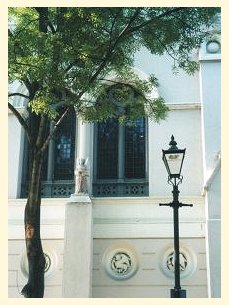
Hughes and Plath were married at the Church of St. George the Martyr,
Queen Square, Holborn, London, on ‘Bloomsday’, 16 June 1956. The time of
their marriage is not known, but the poem, ‘A Pink Wool
Knitted Dress’ (THCP 1064) may offer some clues. There used
to be a law in England that prevented marriages from taking place in the
hours between sunset and sunrise. Whether this was still the case in
1956, I do not know. However, in the poem Ted says that sexton was
“requisitioned” as Best Man although he was about to take children
on a visit to the London Zoo. The Zoo is not far away, and the opening
times in summer are 10am to 5.30pm, with the last entries one hour before
closing time. So, it seem likely that the wedding took place between 10am
and 3pm.
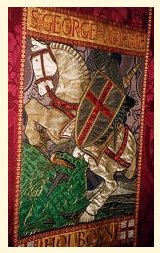
The Church of St George the Martyr is also ‘St George of the Chimney
Sweeps’, as Ted calls it in ‘The Pink Wool Knitted
Dress’. Inside the church there are two nineteenth century
plaques, one reads: “A.D. 1834. Capt. JAMES SOUTH of Devonshire St.
£1,000 consos for Christmas Dinners to Chimney Sweeps from all parts of
London. & after passing of the Act forbid’g the employment of
Climbing Boys. by order of Ct. of Chancery, to the maintenance of ST.
GEORGE the MARTYR. Parochial Schools”. The other plaque is a memorial
erected by the Trustees of the Charity to “the memory of James South
Esq. late Captain in the 52nd Regiment of Foot. The benevolent Founder of
the Chimney Sweepers Charity. He died May 10th. 1834. Aged 65
years”.
Generous as this benevolence seems, it perhaps exemplifies the sort of
piety of which William Blake wrote so angrily in his poem, ‘The Chimney
Sweeper’ (Songs of Experience). In the 1800s, Climbing Boys were
children (apprenticed to chimney sweeps at the age of seven or eight) who
climbed through the narrow, tortuous, maze-like chimney flues of London
houses. Many died of suffocation. By the age of twelve, most had grown
too big for this work and they were crippled, stunted and ill, often with
cancer of the scrotum.
Great Ormond Street Hospital for Children is close to the church of St
George the Martyr. It was founded in 1852 as a hospital for the treatment
of poor children, many of whom would have been Climbing Boys paid for by
charity. In 1929, J M Barrie, the author of the children’s classic,
Peter Pan, donated the copyright of his book to the hospital.
* * * * * * * *
“Where might I find photographs of Ted Hughes for use in my
book?”
The National Portrait Gallery in London has a number of photographs of
Ted Hughes, plus a sculptured plaque by Leonard Baskin and a sketch by
Sylvia Plath. You can view this collection in the ‘picture library’ on
the NPG website .
* * * * * * * *
“What is the origin of the quotation which Ted Hughes chose for the
headstone on Syvia Plath’s grave?”
The quotation “Even amidst fierce flames the Golden Lotus can be
planted”, comes from the The Adventures of Monkey, or The
Journey to the West, written by the Chinese poet and author Wu
Cheng’en (1500-1582) and can be found in the translation by Arthur Waley
(Chinese Classics in English, Taiwan, 1981. CH II). Monkey hears of the
Patriarch Subohdi who lives on Holy Mountain in the ‘Cave of the Slanting
Moon and Three Stars’. 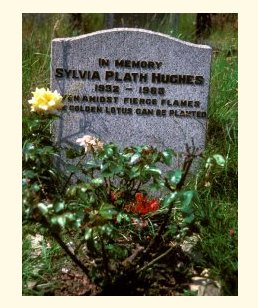 He seeks him out in order to learn the secret of
immortality. In spite of Monkey’s recalcitrance as a pupil, the Patriarch
eventually imparts this verse to him; it may be from the Tao te Ching or
other Taoist teachings but it may equally well be Wu Cheng’en’s own
composition:
He seeks him out in order to learn the secret of
immortality. In spite of Monkey’s recalcitrance as a pupil, the Patriarch
eventually imparts this verse to him; it may be from the Tao te Ching or
other Taoist teachings but it may equally well be Wu Cheng’en’s own
composition:
To spare and tend the vital powers, this and nothing else
Is sum and total of all magic, secret and profane.
All is comprised in these three, Spirit, Breath and Soul;
Guard them closely, screen them well; let there be no leak.
Store them within the frame;
That is all that can be learnt, and all that can be taught.
I would have you mark the tortoise and snake locked in tight
embrace.
Locked in tight embrace, the vital powers are strong;
Even in the midst of fierce flames the Golden Lotus may be planted,
The Five Elements compounded and transposed, and put to new use.
When that is done, be which you please, Buddha or
Immortal”.
